Five programmes
under one roof.
The Kodava language, the written record of Kodagu, the networks its young people don’t have, the information its growers rely on, and a community that helps its own. Two are built. Three are still being worked out, and we say which is which.
Why this exists
A language spoken for centuries, with no digital record at all.
Kodava takk is spoken by somewhere between 114,000 and 200,000 people, most of them in one district of Karnataka and the rest scattered across the world. It is old, distinct, and — by every measure that matters to a computer — invisible.
When we started, there was no translation model for Kodava takk. No parallel corpus. Nothing on HuggingFace, OPUS, Tatoeba, Dakshina, FLORES-200 or NLLB. Not a thin dataset that needed improving: nothing at all.
The written record of Kodagu was in the same condition for a different reason — gazetteers, grammars, census volumes and the great song collections all survive as scanned images of damaged print, unsearchable and unquotable.
Fixing those two things is where this started. It is not where it stops. A language nobody uses to talk about a job, a harvest or a festival is a museum piece, so the same roof now covers the networks young people in Kodagu don’t have, the market information growers rely on, and the community that has never had one place to be.
Catalogue record
- Language
- Kodava takk (Kodagu, Coorgi)
- ISO 639-3
- kfa
- Family
- Dravidian · South Dravidian I
- Scripts
- Kannada script · Kodava Lipi · Latin transliteration, ISO 15919
- Speakers
- 114,000 – 200,000
- Digital corpora
- None, until now
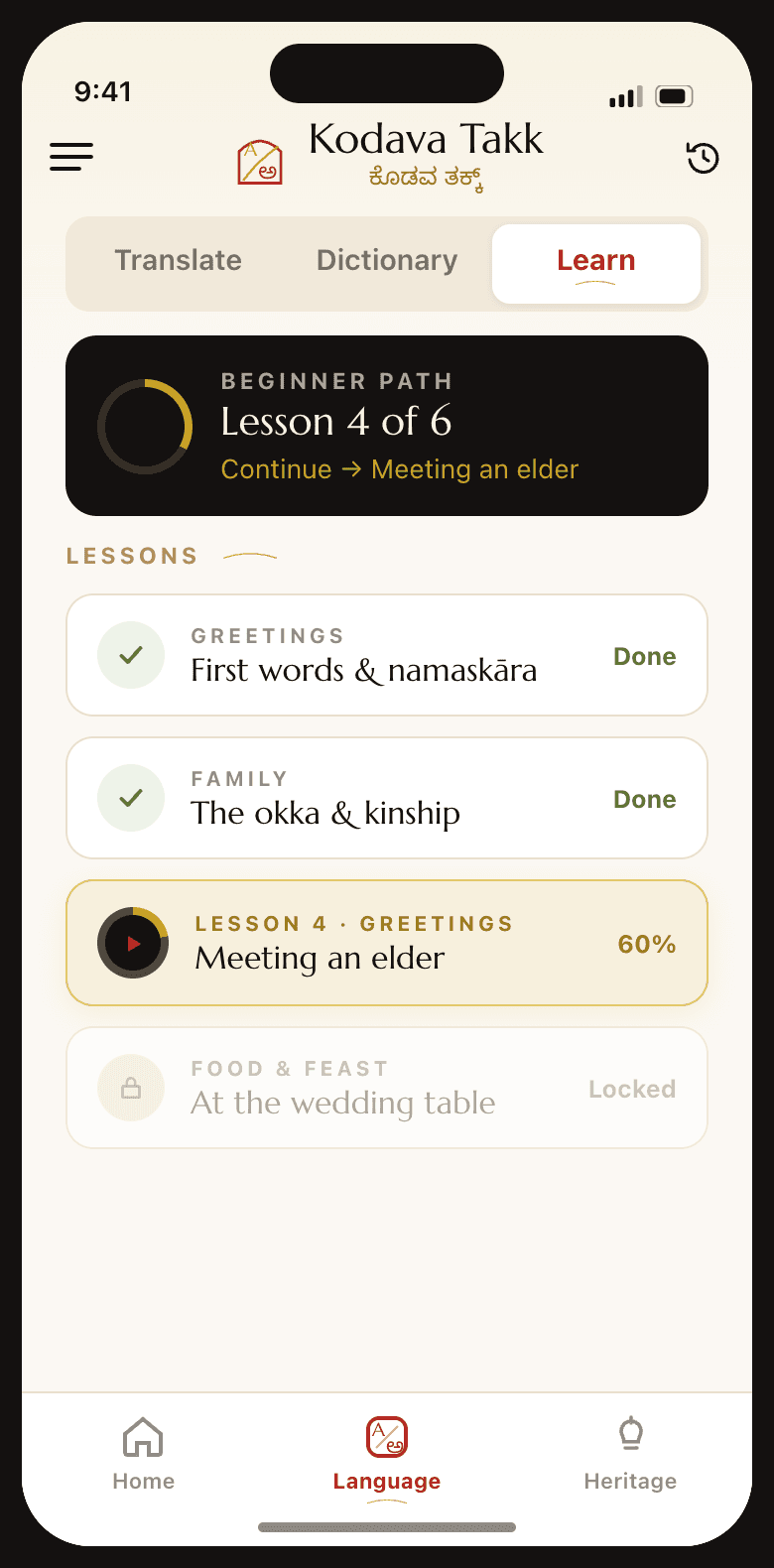
arivāmeಅರಿವಾಮೆ
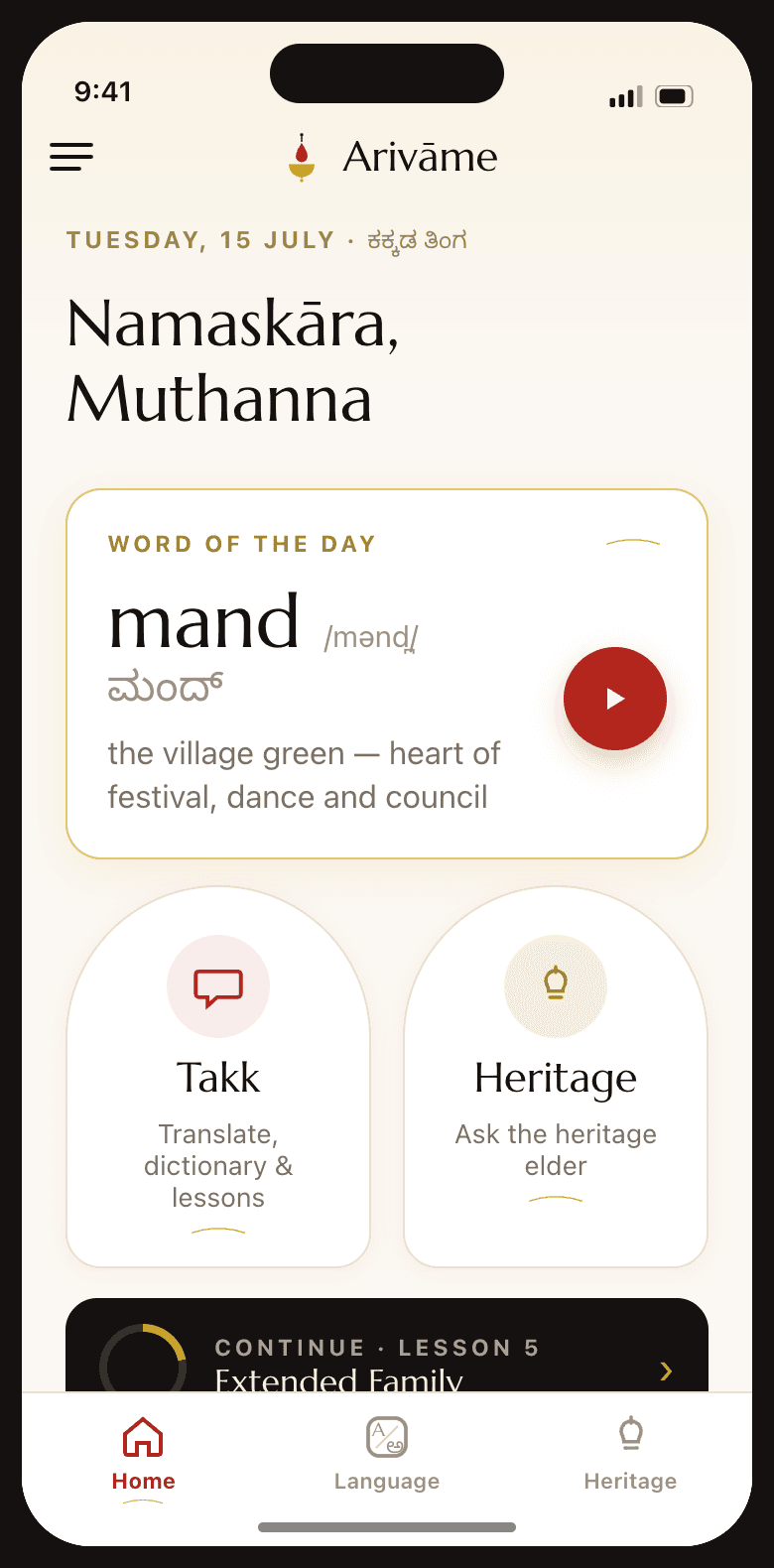
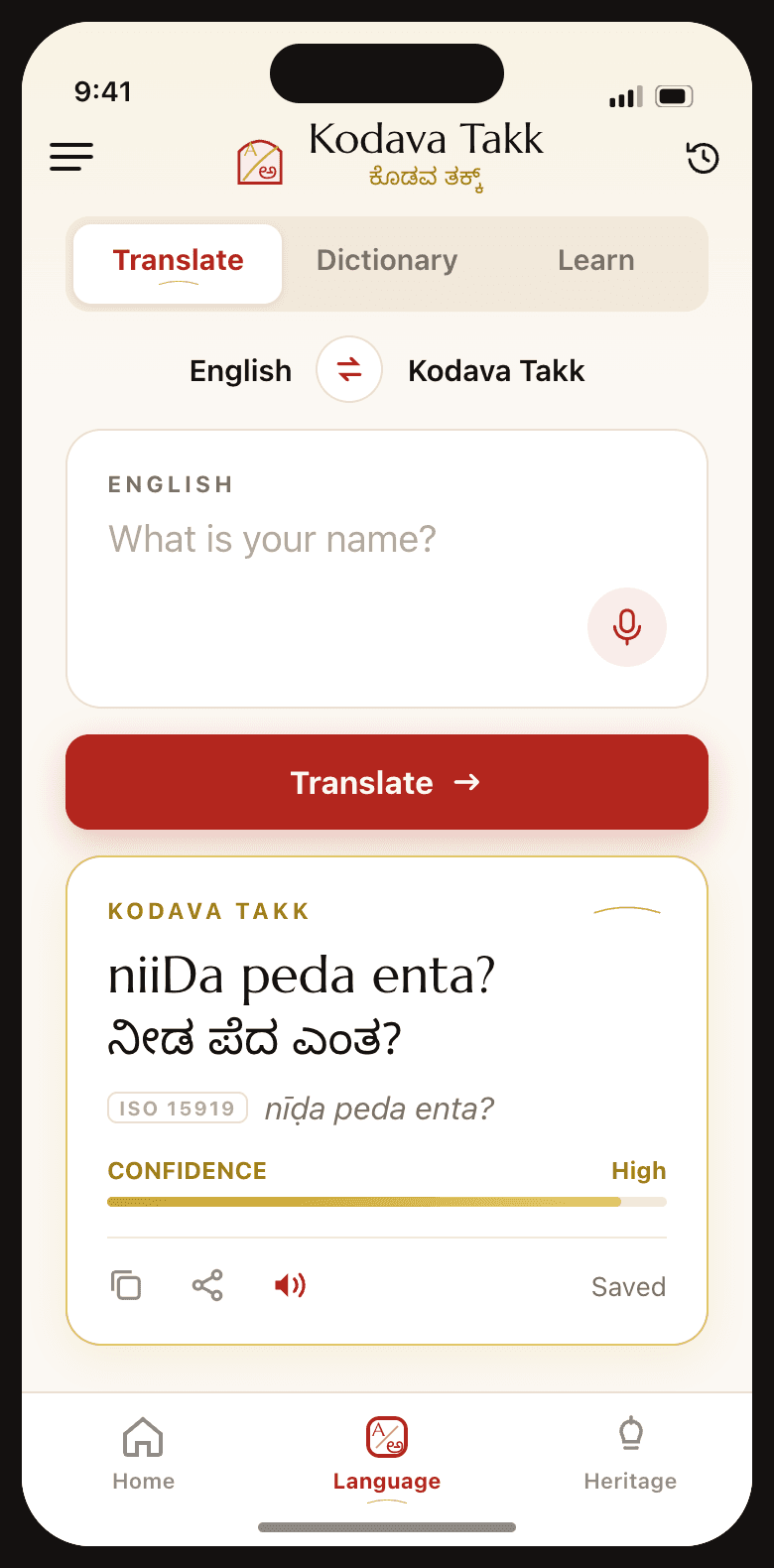
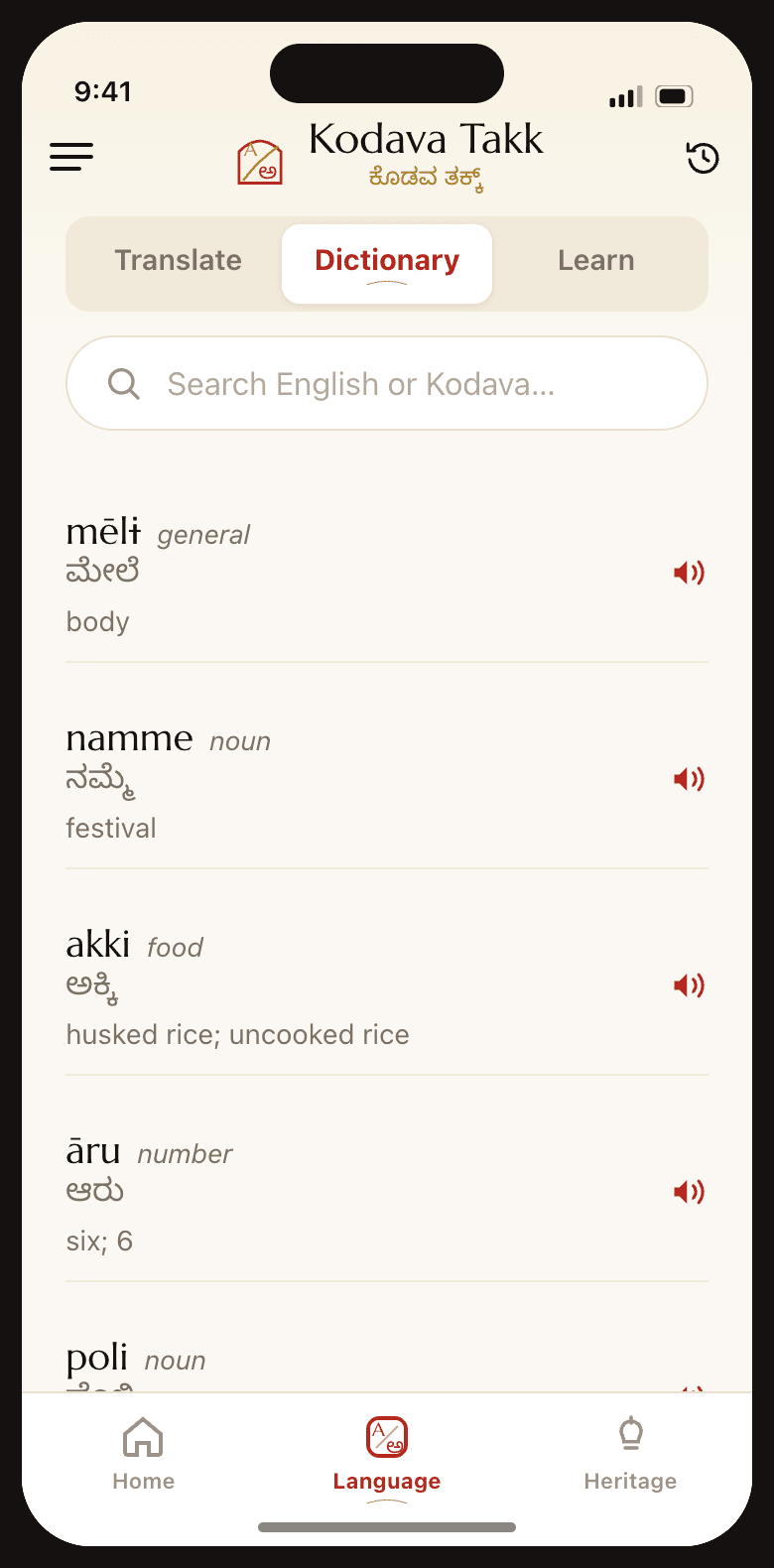
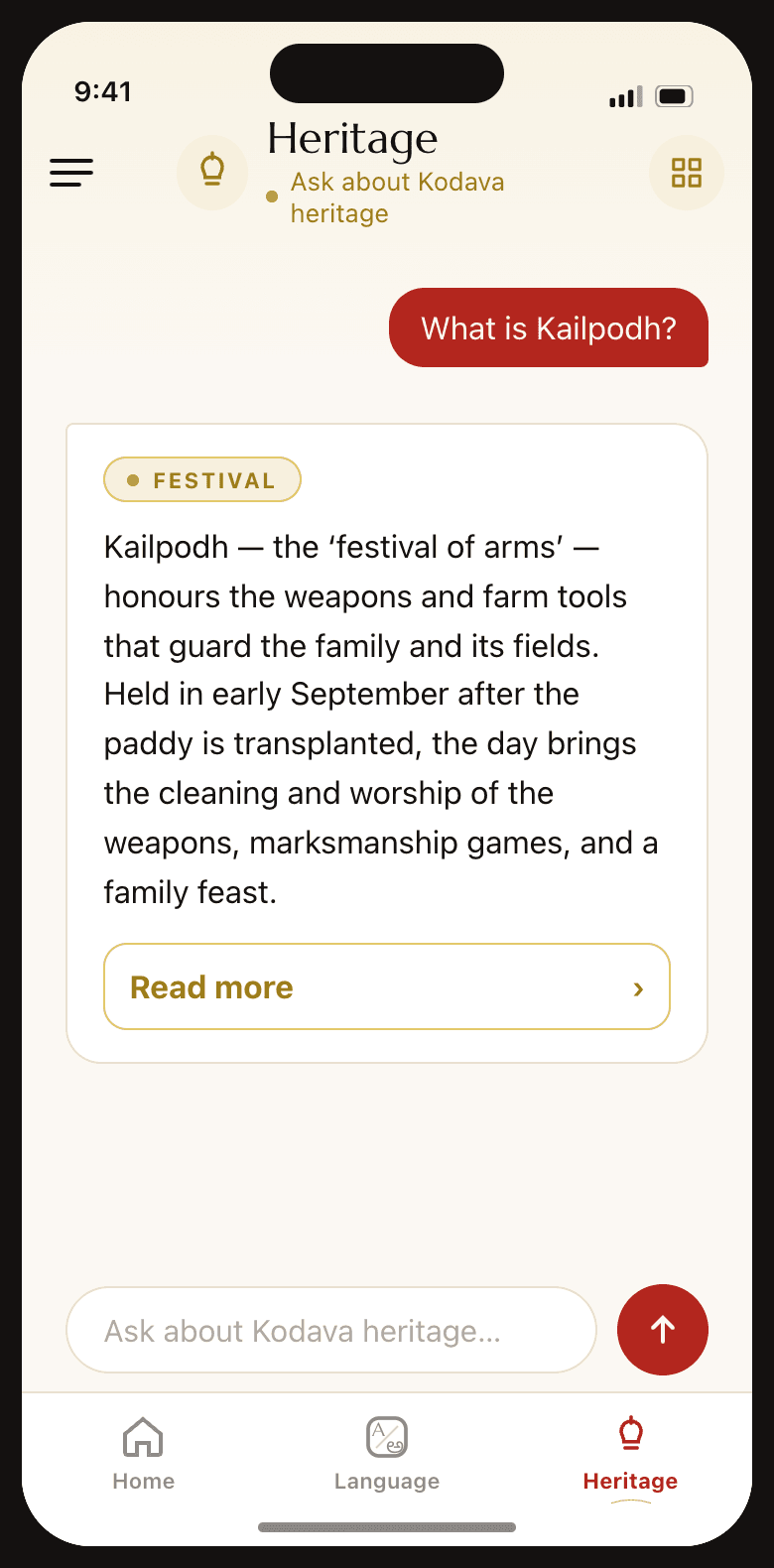
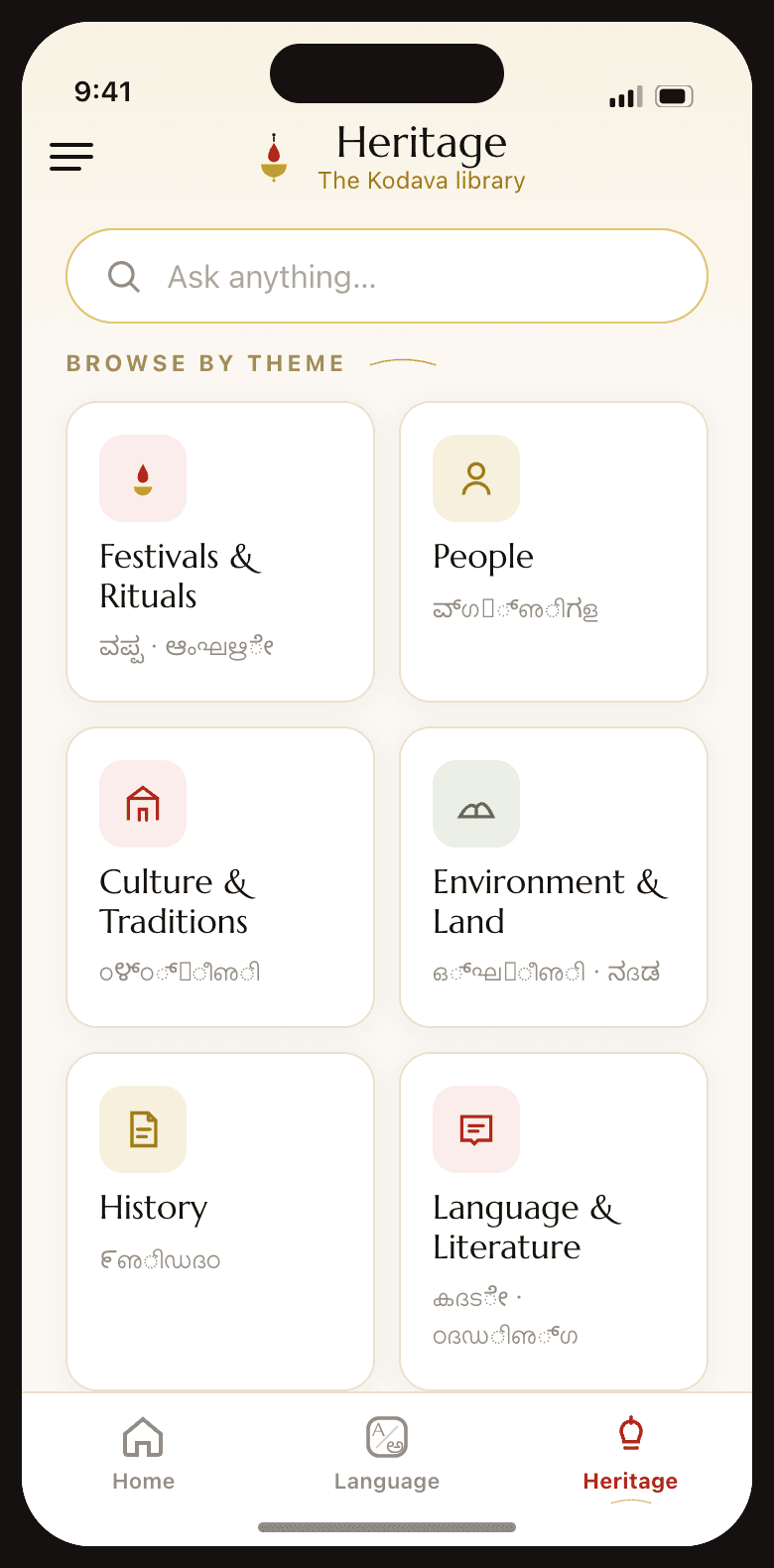
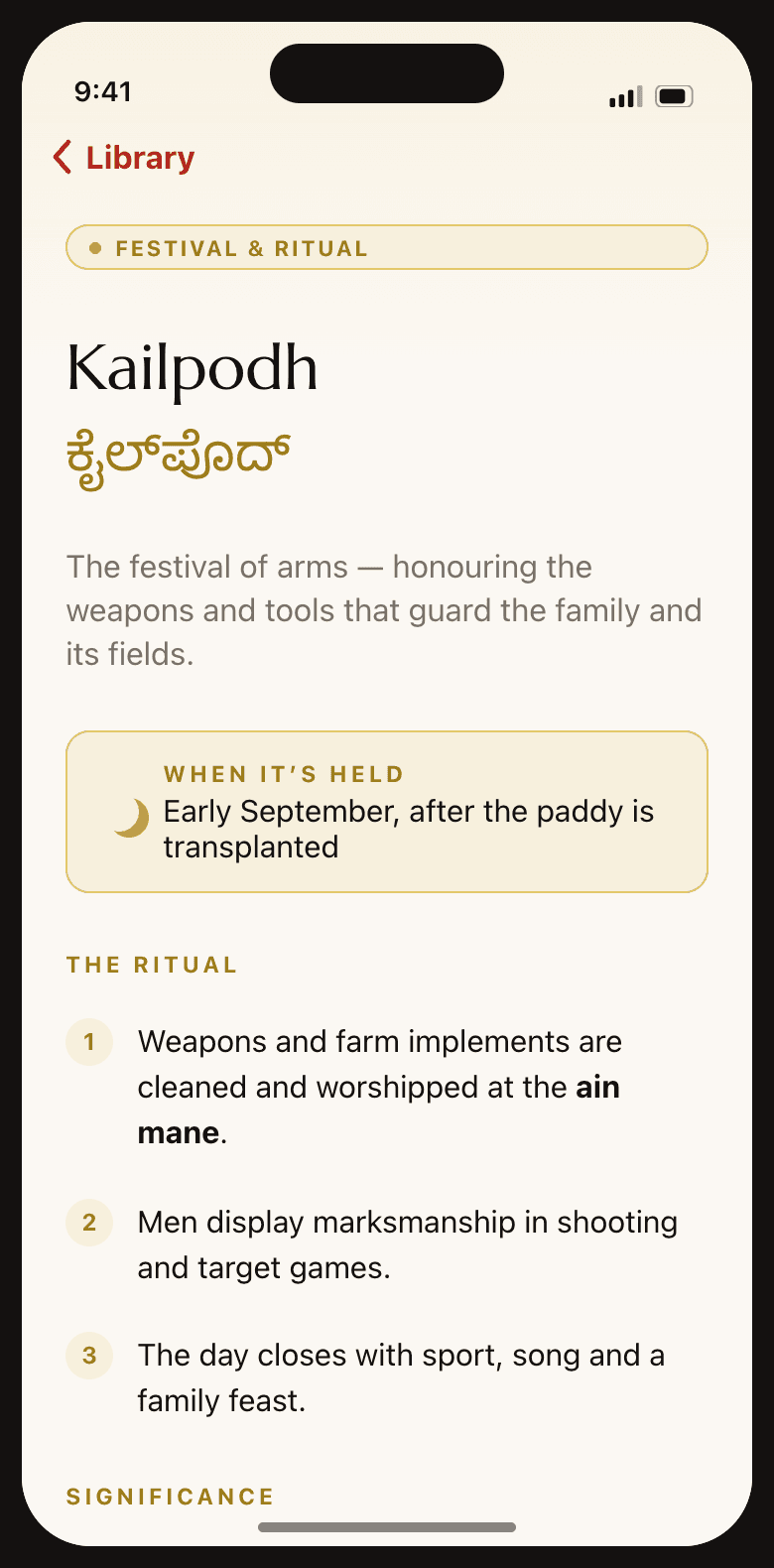
A lamp of knowledge, and the surface most of this reaches people through. The translator, the dictionary and the lessons — carried alongside a restored archive of Kodagu’s history, our folk songs, an AI that answers heritage questions from the sources, and a stage for Kodava creators.
- ·Translate & look up
- ·Learn the language
- ·Ask about heritage
- ·Read the archive
- ·Hear the songs
- ·Follow creators

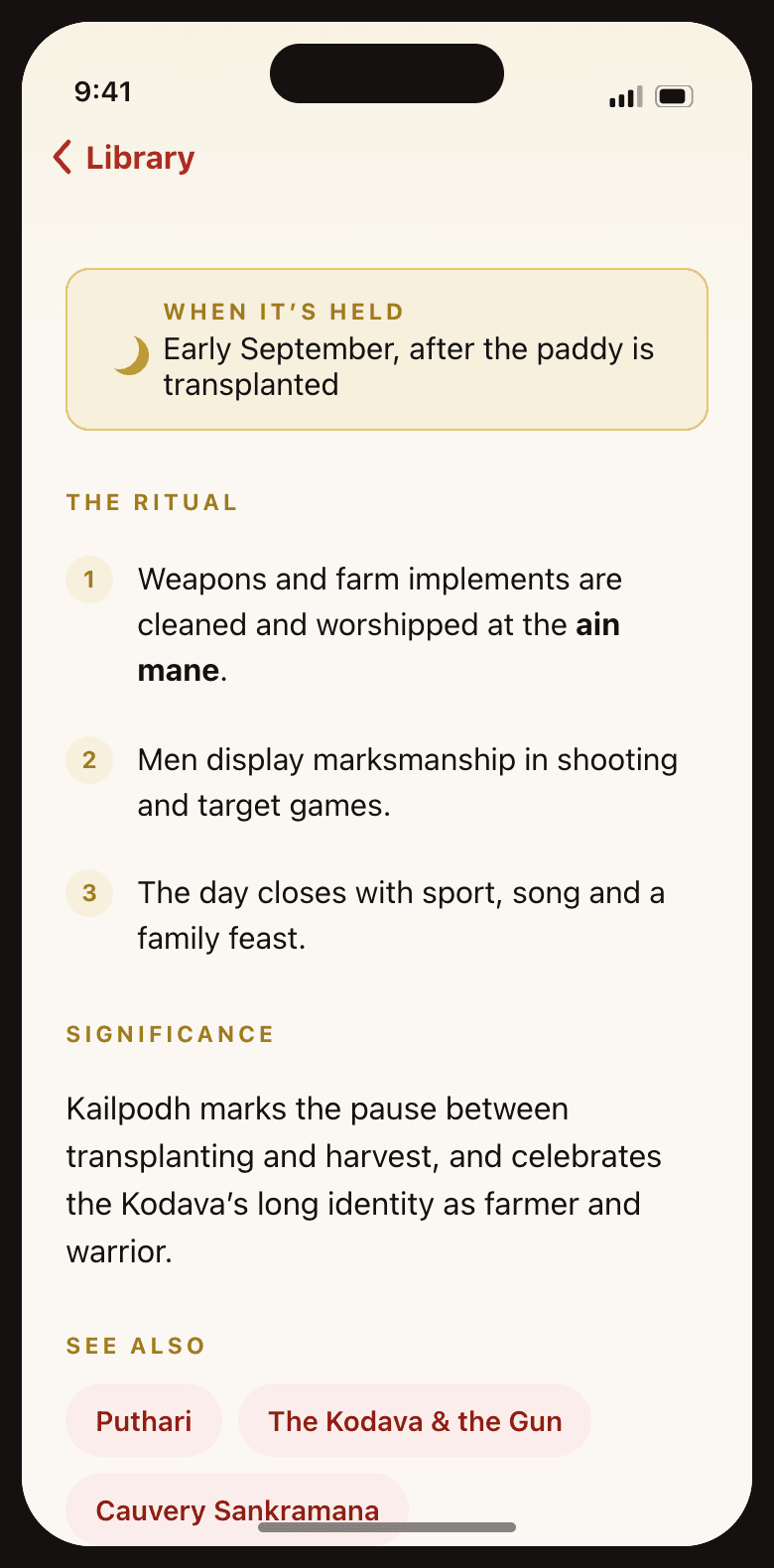
Still being worked out
Three more, and none of them built yet.
A language nobody uses to talk about a job, a harvest or a family crisis is a museum piece. These are the three that take the same roof into the parts of life the archive can’t reach — written up as far as the thinking goes, with nothing promised and no dates.
Take part
None of this works without people.
A model can generalise, but it cannot know whether your grandmother would have said it that way. A mentoring cohort needs somebody willing to give an hour a month. A price board needs growers who will tell the truth about what they were paid.